CLARITY
Understand behaviour
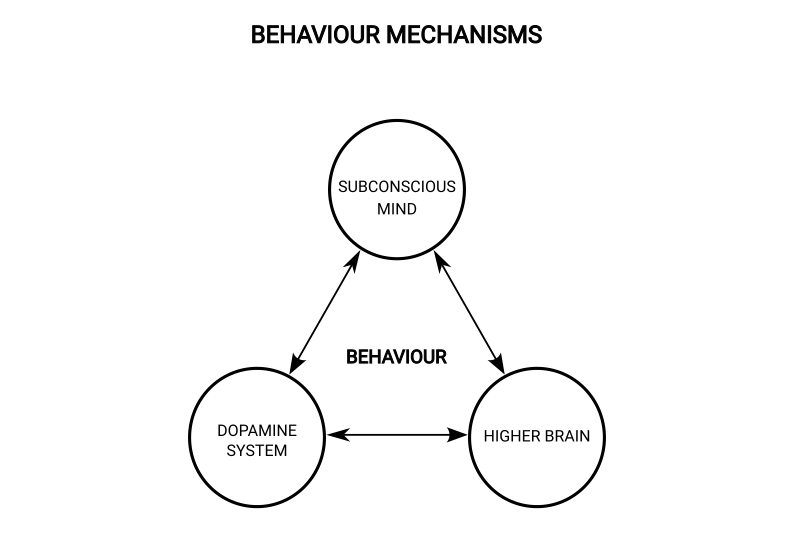
See how the subconscious mind, dopamine system and higher brain combine to shape behaviour.
THE PRACTICAL SOBRIETY METHOD
CLARITY
See how the subconscious mind, dopamine system and higher brain combine to shape behaviour.
PART I
Before you can build an effective recovery strategy, you need a clear picture of the problem you're trying to solve.
Clarity explains the addiction and recovery process, helps you locate yourself within it, and examines the forces that can overwhelm conscious intention.
Why it comes first
Clear models bring the forces shaping addiction into view, making it easier to understand what's happening and where effort is best placed.
Addiction is often interpreted as a simple failure of willpower. That explanation is too narrow. It overlooks the relationship between conscious intention, subconscious behaviour, physical condition, dopamine, executive function and environment.
Part One develops this understanding step by step. It begins by identifying where you're at, then examines the forces shaping behaviour, before bringing everything together into a clearer picture of your situation.
PART I — CLARITY
Explore the stages of addiction and recovery to understand where you are and where you’re heading.
Read the chapter →PART I — CLARITY
See how addiction changes your priorities, pushing alcohol to the very front of the line.
Read the chapter →PART I — CLARITY
Explore the internal forces that overwhelm conscious intention.
Read the chapter →PART I — CLARITY
Meet the simple three-part model of the conscious mind, subconscious mind and body used throughout the book.
Read the chapter →PART I — CLARITY
See how anticipation, reward and repetition can shape desire and influence decisions.
Read the chapter →PART I — CLARITY
Understand why the abilities needed for recovery may be impaired when they’re needed most.
Read the chapter →PART I — CLARITY
Revisit the timeline through the lens of these behavioural mechanisms for a clearer picture of your situation.
Read the chapter →PART I — CLARITY
Examine how your history, circumstances and environment may have helped shape your situation.
Read the chapter →FREE BOOK SAMPLE
STRATEGY
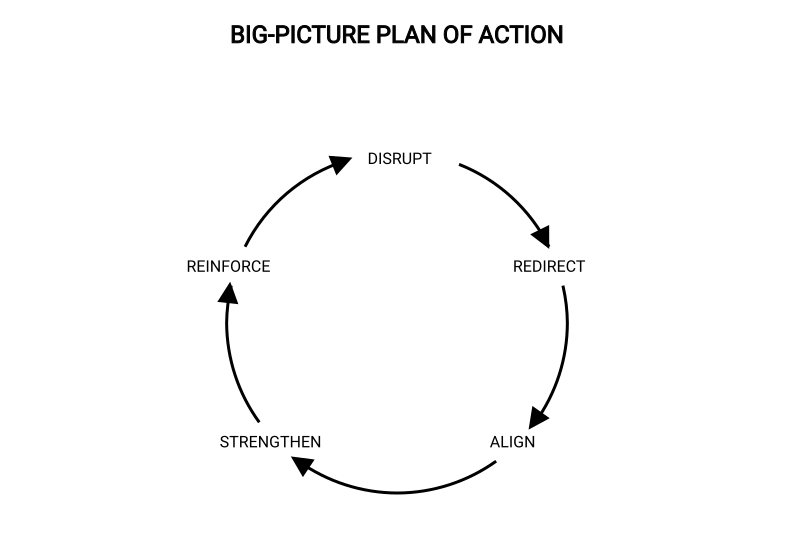
Disrupt the patterns working against you, redirect your behaviour, and reinforce the changes that support recovery.
PART II
Understanding the problem is only the beginning. The next step is developing a practical strategy for solving it.
Strategy builds on the understanding developed in Clarity and turns it into a practical plan.
Turning clarity into action
Recovery becomes more manageable when it’s approached as a structured process rather than a constant test of determination.
Part Two turns the understanding developed in Clarity into an overall recovery strategy. It explores how conscious planning, subconscious behaviour, dopamine, executive function and environment can work together to support recovery.
The aim is to build a coordinated approach in which each element supports the others, strengthening the strategy over time.
PART II — STRATEGY
Understand how sobriety differs from the highs and lows of drinking, and why progress takes patience.
PART II — STRATEGY
See recovery as a progression through changing stages, each with its own priorities, needs and areas of focus.
PART II — STRATEGY
Support intent with advance decisions, preparation and changes to your environment.
PART II — STRATEGY
Learn how repetition, emotion, imagery and experience can gradually bring subconscious behaviour into line with conscious intention.
PART II — STRATEGY
Redirect motivation towards constructive possibilities and break recovery into small, clear and manageable steps.
PART II — STRATEGY
Strengthen the abilities needed for recovery by recognising automatic patterns, improving your physical condition and practising new responses.
PART II — STRATEGY
Make the most of your conscious and subconscious capacities by introducing focused changes gradually and allowing them time to become established.
PART II — STRATEGY
Identify difficult situations in advance, avoid unnecessary risks and prepare for circumstances you can’t avoid.
PART II — STRATEGY
Bring the separate principles together into one coordinated strategy before putting them into practice.
FREE BOOK SAMPLE
SOBRIETY
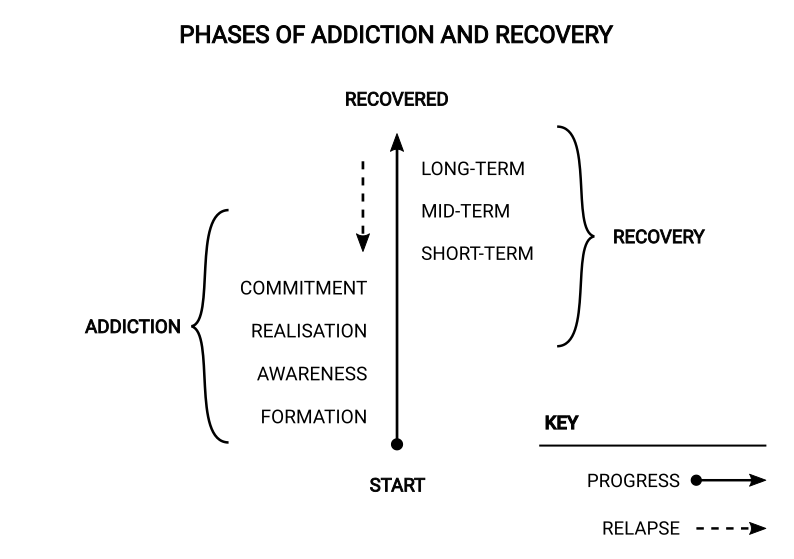
Move from preparation through early recovery to long-term growth, with priorities appropriate to each stage.
PART III
This is where theory becomes practical.
Sobriety provides a framework you can adapt to your own circumstances, beginning with preparation and moving through the first day, the early weeks, greater stability and long-term growth.
Guidance changes as recovery progresses. What matters most at the beginning isn’t necessarily what matters several months or years later.
From preparation to long-term growth
Part Three applies the strategy to each stage of recovery, adjusting the focus as your needs change and your capabilities grow.
The process begins with groundwork and a deliberately narrow focus. As recovery develops, attention gradually expands towards physical health, mental clarity, personal responsibility and meaningful growth.
Each stage builds on the one before it. The aim is to move beyond stopping drinking towards a fulfilling life in which sobriety becomes increasingly stable and natural.
PART III — SOBRIETY
Lay the foundations for recovery by preparing your environment and directing your attention towards change.
PART III — SOBRIETY
Understand the stages of early recovery and how your needs, risks and capabilities change as you progress.
PART III — SOBRIETY
Prepare for one safely planned alcohol-free day by reducing unnecessary demands, organising your time and arranging a supportive environment.
PART III — SOBRIETY
Build on day one, prepare for familiar triggers and begin restoring the physical foundations that support recovery.
PART III — SOBRIETY
Break through the familiar weekly cycle and redirect returning time, energy and attention towards physical and mental recovery.
PART III — SOBRIETY
Gradually raise expectations, improve daily habits and give greater attention to fitness, mindfulness and future wellbeing.
PART III — SOBRIETY
Recognise how returning vitality and confidence can lead to complacency, and protect your progress from being tested too soon.
PART III — SOBRIETY
Build on early stability through greater self-direction, personal responsibility, continued growth and contribution to others.
PART III — SOBRIETY
Build a fulfilling life through self-knowledge, guiding principles, meaningful direction and increasing trust in your own judgement.
PART III — SOBRIETY
Respond to a setback with kindness, examine what led to it and build on what you’ve learned to strengthen your strategy.
PART III — SOBRIETY
Carry the process forward with patience and determination, continuing to learn and adapt as you go.
FREE BOOK SAMPLE